Secure websites use HTTPS certificates. A lock icon or
https:// means you’ve safely connected to the official
website.
Year of the Tree – Interpretive Program – Looking at Leaves
Learning Activity 7: Looking at Leaves
Learning Objectives:
Observe how leaves from different plants compare.
Nutshell/Skill:
Students can describe and identify leaves.
Science Essential Standards:
3.L.2.1
ELA Essential Standards:
RI.3.5
Time:
Part 1: 30 minutes
Part 2: 30 minutes
Teacher Materials:
Video on photosynthesis by They Might Be Giants
Student Materials:
Tree field guides
Nature Journals
Private Eyes (or other magnifiers)
Colored pencils
Lesson Prep
Identify the species of a few trees in the schoolyard.
Determine which field guides students will be using and familiarize yourself with them.
Make copies of the nature journaling prompt for students if preferred.
Preview the video on leaves.
Vocabulary
Leaf, photosynthesis
Procedure Part 1:
Independent Work
Take your class outside for students to observe leaves.
Students will describe, draw, compare, and contrast leaves in their nature journals.
Instruct students to observe leaves where they find them, whether on the ground or on a plant. Students do not need to remove the leaf from the plant for this assignment.
Nature Journaling Prompt:
Describe your leaf. What does it look like? What does it feel like? What shape is it? What does the edge of the leaf look like?
Sketch your leaf. Be sure to include the veins of the leaf. Are the veins parallel? Do they radiate out from a central point?
Have students choose a second leaf to compare to their first leaf. At least one of their 2 leaves needs to be a leaf from a tree.
Nature Journaling Prompt:
How are the leaves different? List at least 3 differences.
How are the leaves the same? List at least 2 ways the leaves are the same.
What is the function of a leaf?
Nature journaling prompts are on a separate page at the end of this lesson to allow you to print them out for students if preferred.
Mini-Lesson
Discuss the leaves students examined, and the function of leaves.
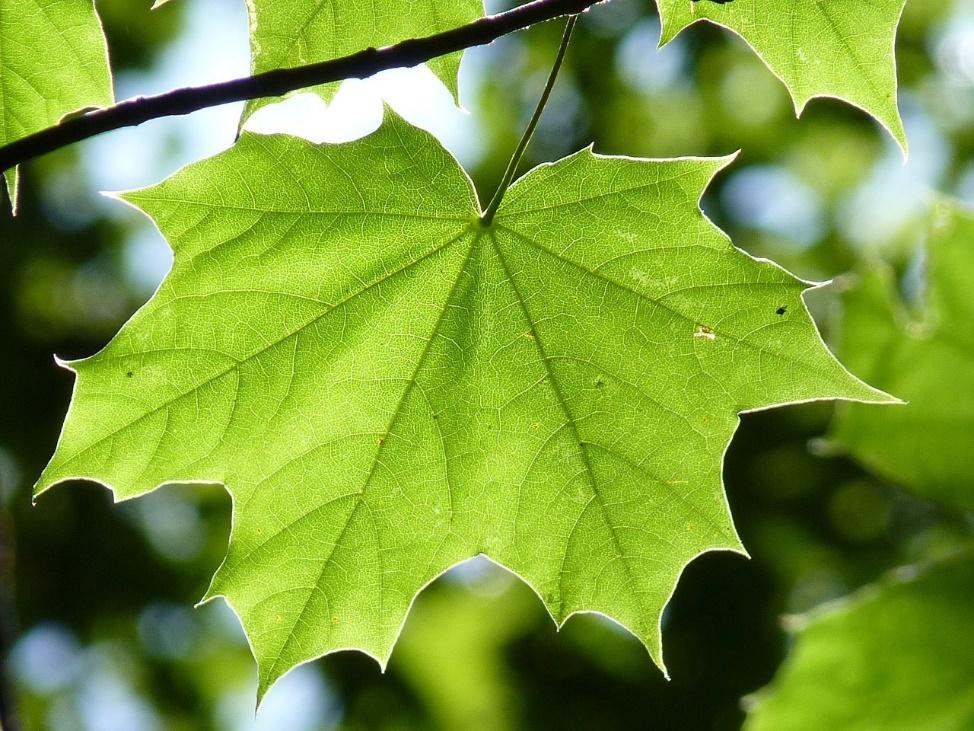
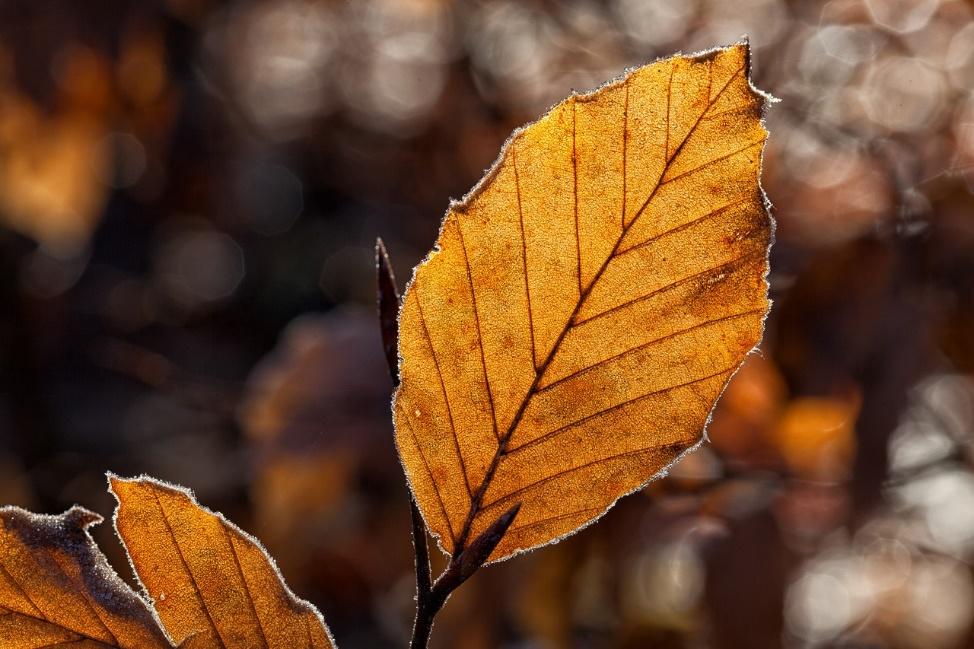
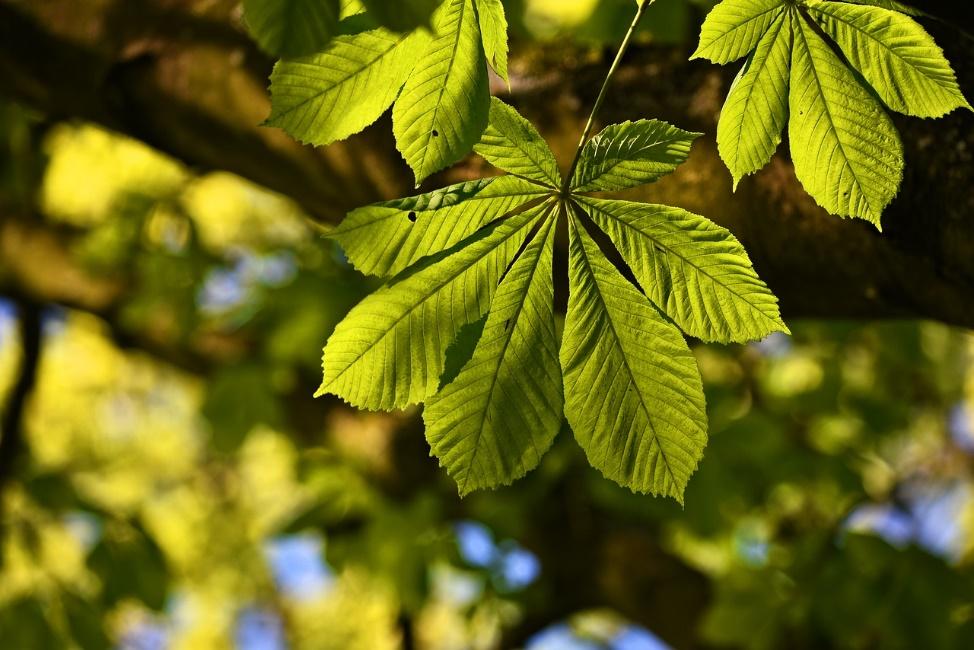
Bring a few leaves inside with you to use during your discussion, or you can use pictures such as the ones at the end of this lesson.
Show a video on photosynthesis to connect back to the function of leaves - "Photosynthesis" by They Might Be Giants (1:58).
Procedure Part 2:
Independent Group Work
Have students go outdoors to look at leaves to identify the species of a tree. They can use books or online field guides, such as:
Common Forest Trees of North Carolina from the North Carolina Forest Service
"What Tree is That?" online tree identification guide from the Arbor Day Foundation
Before going outside, introduce the tree identification guides you will be using and how to use them. If using books, show them how the trees are grouped. Show them the table of contents and the index.
Choose trees for students to investigate that you have previously identified.
Some common trees you may find on your school grounds are:
Black Oak
Flowering Dogwood
Redbud
Red Maple
River Birch
Southern Magnolia
Sourwood
Sweetgum
Sycamore
Tuliptree (Yellow Poplar)
White Oak
Willow Oak
Give students a short list of possible trees, including the correct one, for them to look up.
Have students work in groups of 3-5 people.
Assign a group per tree.
Rotate between groups to assist with identifying the trees.
Once students have identified the trees, have each group share their tree’s identity and where they found the information. Also, have students share a fact they learned about their tree.
Assessment
Exit ticket: What is the function of a leaf?
Opportunities for Extended Learning
To go more in-depth on leaves, watch Mystery Doug’s video on "Why do leaves change color in the fall?" (5:25).
Behavior Management Tips
Before going outside, have a brief discussion about how to behave respectfully toward plants and nature. In particular, discuss how they can observe leaves without removing them from the plants or otherwise hurting the plants. Ask students for their ideas.
For the nature journaling prompts, emphasis that students are honing their observation skills and should be looking at the details. Give them a timeframe of how long they will be working on each prompt. Announcing how much time they have left can help clarify that expectation.
Set expectations of interaction and talking amongst each other for nature journaling. For example, tell students to stay silent and focused on their own leaves as well as that they will be given a chance to discuss the leaves later.
To help students stay focused, make identifying the trees into a challenge. For instance, you could have a time limit or a challenge to be the first to correctly id their tree.
Leaves Nature Journaling Prompt 1:
Describe your leaf. What does it look like? What does it feel like? What shape is it? What does the edge of the leaf look like?
Sketch your leaf. Be sure to include the veins of the leaf. Are the veins parallel?
Leaves Nature Journaling Prompt 2:
How are the leaves different? List at least 3 differences.
How are the leaves the same? List at least 2 ways the leaves are the same.
What is the function of a leaf?
Leaves Nature Journaling Prompt 1:
Describe your leaf. What does it look like? What does it feel like? What shape is it? What does the edge of the leaf look like?
Sketch your leaf. Be sure to include the veins of the leaf. Are the veins parallel?
Leaves Nature Journaling Prompt 2:
How are the leaves different? List at least 3 differences.
How are the leaves the same? List at least 2 ways the leaves are the same.
What is the function of a leaf?
Leaves Nature Journaling Prompt 1:
Describe your leaf. What does it look like? What does it feel like? What shape is it? What does the edge of the leaf look like?
Sketch your leaf. Be sure to include the veins of the leaf. Are the veins parallel?
Leaves Nature Journaling Prompt 2:
How are the leaves different? List at least 3 differences.
How are the leaves the same? List at least 2 ways the leaves are the same.