NC PARTF Annual Report 2013 to 2014
N.C. PARKS & RECREATION TRUST FUND
2013 ANNUAL REPORT 2014
NORTH CAROLINA PARKS AND RECREATION TRUST FUND
2013-14 Annual Report
THE N.C. DIVISION OF PARKS AND RECREATION
Mike Murphy, Director
John E Skvarla, III
Secretary
Pat McCrory
Governor
Table of Contents
List of Tables
Parks and Recreation Trust Fund
- 3-1 Distribution of Revenues for Fiscal Year 2013-14
Grants Program for Local Governments
- 4-1 PARTF Grants Awarded in Fiscal Year 2013-14
State Parks System
- 5-1 Land Acquisition Projects for Fiscal Year 2013-14
- 5-2 Capital Improvement Projects for Fiscal Year 2013-14
Public Beach and Coastal Waterfront Access Program
- 6-1 Communities Prioritized for FY 2013-14 Funding Based on FY 2013-14 Deposits and Other Available Funds
Introduction
The North Carolina General Assembly established the North Carolina Parks and Recreation Trust Fund (PARTF) on July 16, 1994. The General Assembly made an initial appropriation of $1 million to the PARTF to fund improvements in state parks, to fund grants for local governments and to increase public access to the state’s beaches. In 1995, the General Assembly dedicated funds from the excise stamp tax to the trust fund. Currently, PARTF is funded by an annual appropriation. Additional revenue is allocated from a portion of the fees from personalized license plates as well as investment earnings credited to the assets of the fund. The Parks and Recreation Authority, a citizen board, was also created to allocate funds from the PARTF to projects in state parks and to grants for local governments
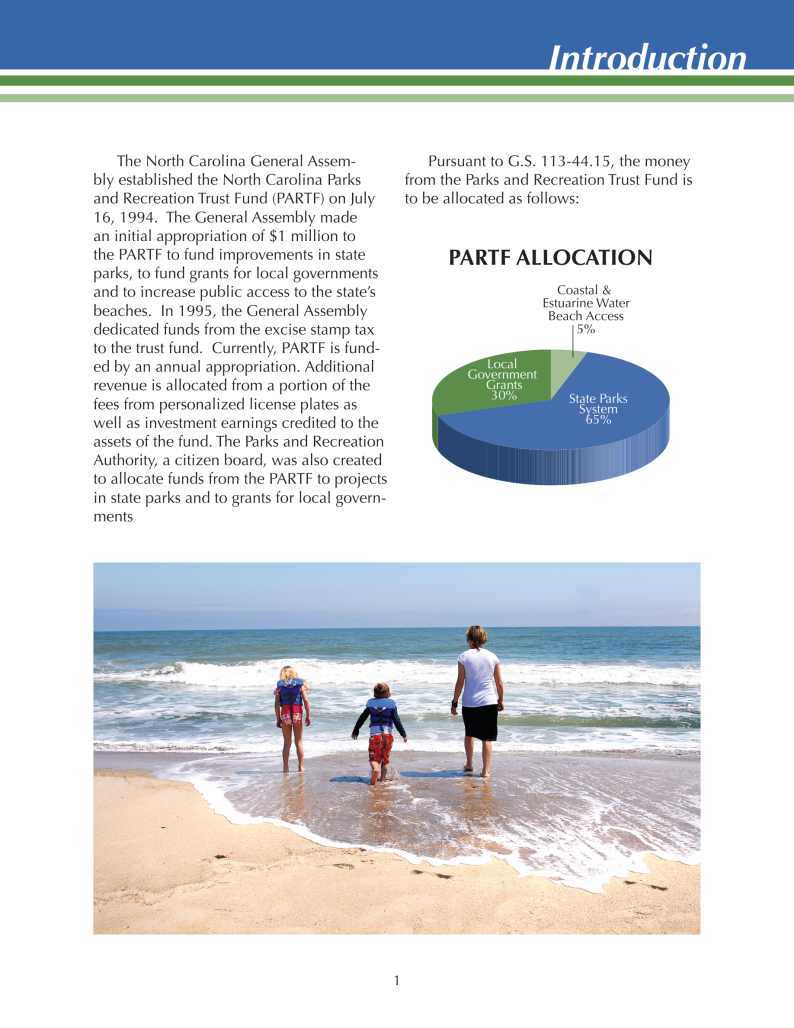
Pursuant to G.S. 113-44.15, the money from the Parks and Recreation Trust Fund is to be allocated as follows:
North Carolina Parks & Recreation Authority
The North Carolina Parks and Recreation Authority, a 9-member board, oversees the Parks and Recreation Trust Fund. The Governor appoints three members, including the chairperson. The General Assembly appoints six members: three upon the recommendation of the President Pro Tempore of the Senate and three upon the recommendation of the Speaker of the House.
The Authority is charged with six powers and duties:
- to receive public and private donations and funds for deposit into the trust fund
- to allocate funds for land acquisition
- to allocate funds for capital projects
- to solicit financial and material support
- to develop effective support for parks and recreation
- and to advise the Secretary of DENR on any matter he may refer to the body.
Members are appointed for three-year terms and may serve no more than two consecutive three-year terms. After serving two consecutive three-year terms, a member is not eligible for appointment to the Authority for at least one year after the expiration of the member’s last term. The Parks and Recreation Authority held three meetings during fiscal year 2013-14.
2013-2014 Parks and Recreation Authority Members
- Mr. Jason Kay, Jr. [Chairman], Charlotte
- Ms. Ann Babcock, Asheville
- Ms. Lydia Boesch, Pinehurst
- Mr. Walter (Westin) Bordeaux, Charlotte
- Mr. Paul A. Herbert, Davidson
- Mr. Neal Lewis, Wilmington
- Ms. Cynthia Tart, Oak Island
- Ms. Lisa Wolf, Burlington
- Mr. Edward Wood, Edenton
Parks & Recreation Trust Fund Revenue Summary
The Parks and Recreation Trust Fund (PARTF) is housed within the North Carolina Division of Parks and Recreation. The Parks and Recreation Authority allocates PARTF revenue to the state parks capital improvement and land acquisition projects. This board also selects the recipients of the grants to local governments to create or improve parks and recreational projects. The Division of Parks and Recreation develops priorities for the state parks system and recommends projects for the board’s approval. Once the board has allocated the PARTF funds, the Division manages the projects for state parks and for the grant program for local governments.
The Division of Parks and Recreation transfers 5 percent of PARTF revenue to the Division of Coastal Management (DCM) for the Coastal and Estuarine Water Beach Access Program. The Division of Coastal Management administers these funds and offers matching grants to local governments throughout the 20 coastal counties. The FY 2013-14 budget bill, SL 2011-0145, redirected some of the funds to other purposes before the money was allocated in accordance with G.S. 113-44.15. (Table 3-1).
| Item | Amount |
|---|---|
| REVENUE | |
| FY 2013-14 Appropriation | 11,000,000 |
| Revenue from Personalized License Plates | 1,351,390 |
| Revenue from Interest on Balance | 103,778 |
| Total Revenue | 12,455,168 |
| Minus Funding for 15 Division of Parks & Recreation Positions | 1,041,668 |
| Minus Funding for Lake Waccamaw Hydrilla Treatment | 250,000 |
| Total Revenue Available for Allocation | 11,163,500 |
| DISTRIBUTION | |
| Public Beach & Coastal Waterfront Access Program (5%) | 558,175 |
| Local Government Matching Grants Program (30%) | 3,349,050 |
| State Park System (65%) | 7,256,275 |
Grants Program for Local Governments
Program Description
The Parks and Recreation Trust Fund (PARTF) program provides dollar-for-dollar matching grants to local governments. All counties and incorporated municipalities are eligible applicants. Public authorities, as defined in G.S. 159-7, that have a mandate to provide public recreation, are also eligible. Two or more local governments may apply jointly. Recipients can acquire land to be used for public recreation or to protect the natural or scenic resources of the property. Recipients can also use a grant to build or renovate recreational and support facilities. All facilities must serve the general public.
In August of each year, the Division of Parks and Recreation (DPR) sends a description of the PARTF program and the schedule for submitting an application to local governmental officials and parks and recreation directors. A local government can request a maximum grant amount of $500,000 in PARTF assistance with each grant application. The appraised value of land that is donated to a local governmental unit may be applied to the dollar-for-dollar matching requirement.
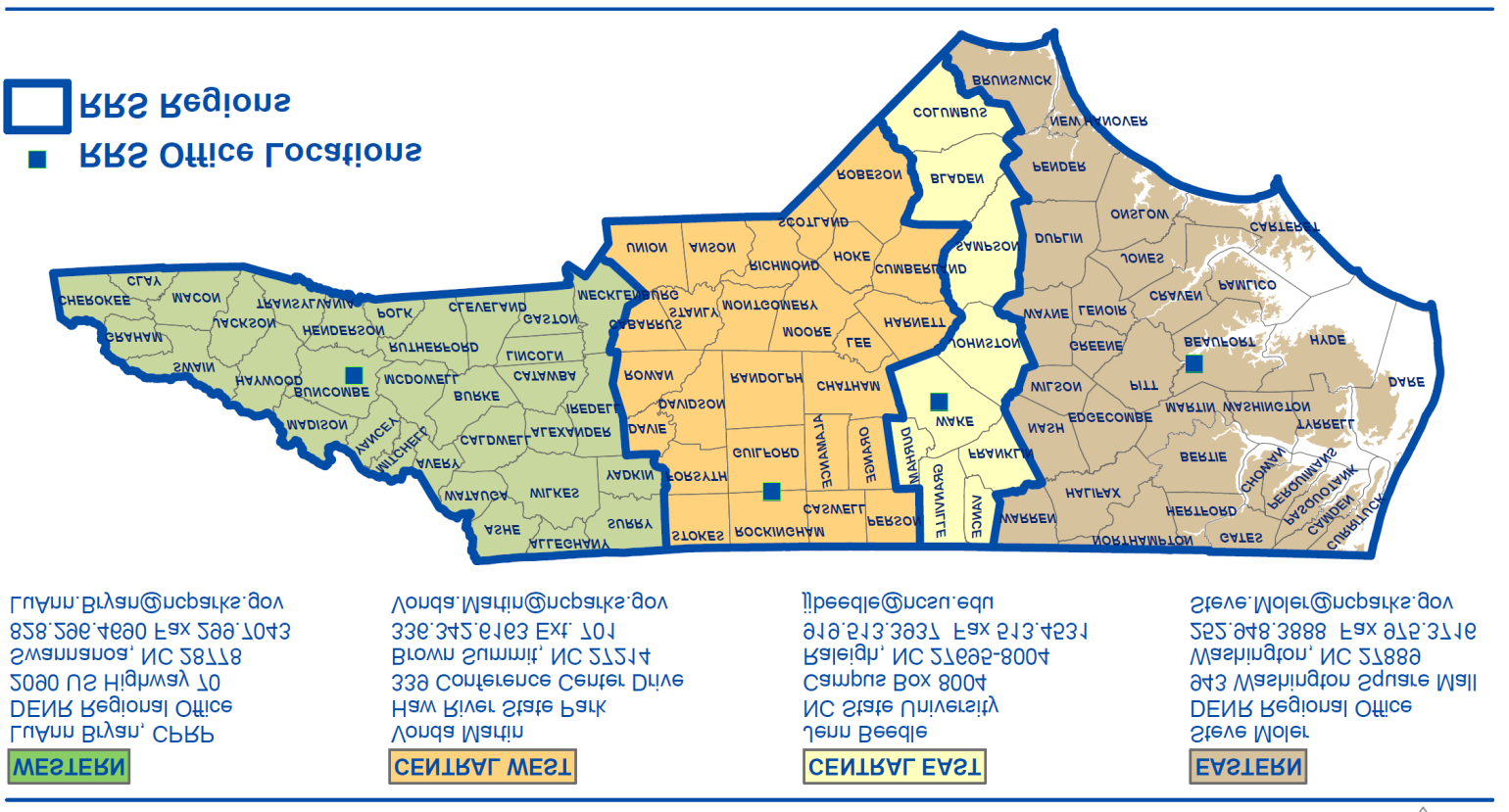
DPR provides assistance to local governments in several ways. In September, the PARTF staff conducts a workshop for local governments to learn about the program and how to complete an application. The workshop is presented simultaneously at University of North Carolina System video conference sites. DPR has a contract with North Carolina State University to provide technical assistance to local governments through the Recreation Resources Service (RRS). RRS assists local governments in planning PARTF projects and preparing grant applications with four consultants in regional offices across the state (see map below).
Description of Applications and Grants
The members of the Parks and Recreation Authority select the projects that will receive a grant. The factors considered by the Authority as it selects recipients include, but are not limited to, the criteria contained in the PARTF scoring system, the population of the applicant, the geographic distribution of projects across the state, the presence or absence of other funding sources and compliance with prior grant agreements.
Applications were due January 31, 2013. The Parks and Recreation Authority met in November 2013 to select grant recipients.
The PARTF revenues allocated to local grants for fiscal year 2013-14 were $3,349,050. Sixty-four (64) local units of government submitted PARTF applications, requesting $17.6 million in PARTF assistance. At the November 22, 2013 meeting, the Authority awarded 14 grants for $4,486,795. The difference between the amount awarded and the fiscal year distribution is $1,137,745. This additional revenue is from cancelled projects, reductions in the scope of work, and projects completed under budget in previous fiscal years.
Table 4-1 shows a list of the projects approved for fiscal year 2013-14 at the November meeting. The table is organized alphabetically by recipient.
| SPONSOR | PROJECT NAME | GRANT AMOUNT |
|---|---|---|
| Town of Belmont | Belmont River Park | $450,000 |
| City of Brevard | Rosenwald Community Park | $223,500 |
| Town of Cofield | Community Building | $221,996 |
| Town of Duck | Soundside Boardwalk | $137,500 |
| Town of Granite Falls | Granite Falls Recreation Center Renovation | $136,250 |
| Henderson County | Henderson County Athletics and Activity Center | $500,000 |
| Town of Knightdale | Knightdale Station | $400,000 |
| Town of Lansing | Lansing Town Park Expansion | $500,000 |
| Macon County | Parker Meadows Recreational Park | $500,000 |
| Town of Mars Hill | Mars Hill Recreation Park Pool Renovations | $22,500 |
| Town of Morrisville | RTP Park Development | $399,777 |
| Person County | Recreation and Senior Center - The Life Center | $353,000 |
| Town of Spencer | Spencer Woods Fred Stanback Preserve & Educational Forest Development | $202,362 |
| Town of Topsail Beach | Topsail Beach Town Center Park | $439,910 |
| TOTAL | $4,486,795 |
Population and Geographic Distribution of Grants
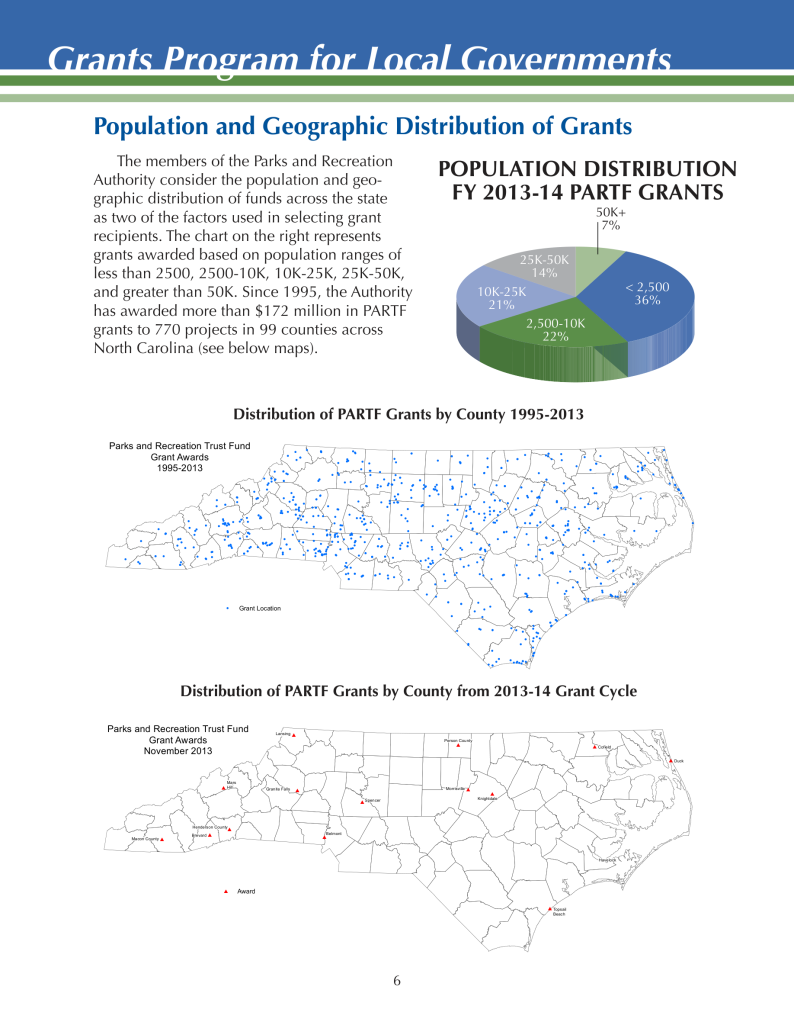
The members of the Parks and Recreation Authority consider the population and geographic distribution of funds across the state as two of the factors used in selecting grant recipients. The chart on the right represents grants awarded based on population ranges of less than 2500, 2500-10K, 10K-25K, 25K-50K, and greater than 50K. Since 1995, the Authority has awarded more than $172 million in PARTF grants to 770 projects in 99 counties across North Carolina (see below maps).
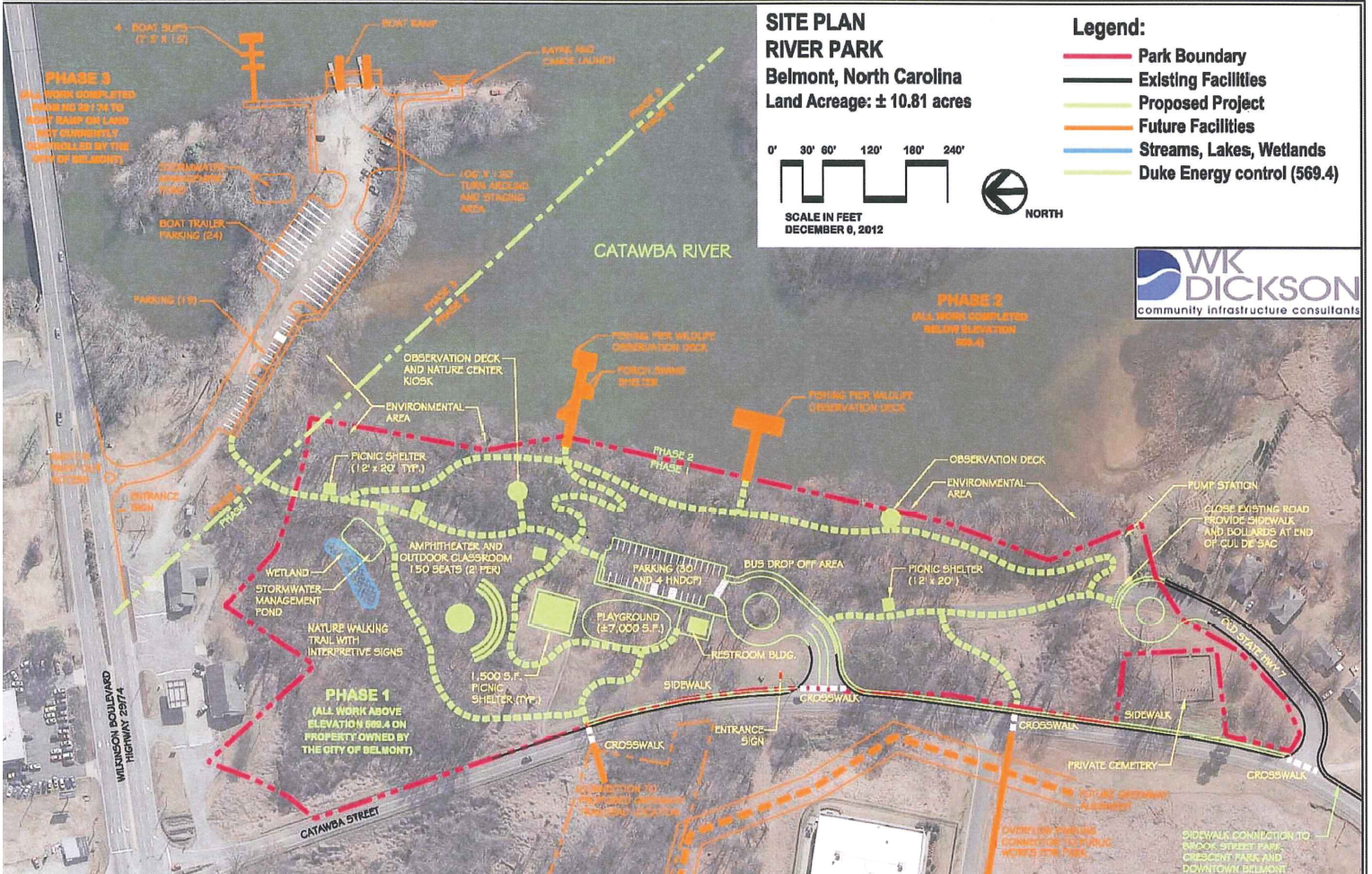
Examples of 2013-14 Selected Local Government PARTF Projects
Town of Belmont—Gaston County
Belmont River Park sits on the banks of the Catawba River. Once developed, this 10.9-acre site will provide a variety of active and passive recreation elements such as walking, running, picnicking and youth play. The park’s unique location adjacent to the Catawba river will provide visitors the opportunity to enjoy water-based sports like boating, fishing and kayaking. The park will also allow visitors to connect with other areas of the town and county through 1,450 linear feet of sidewalk along the park frontage road.
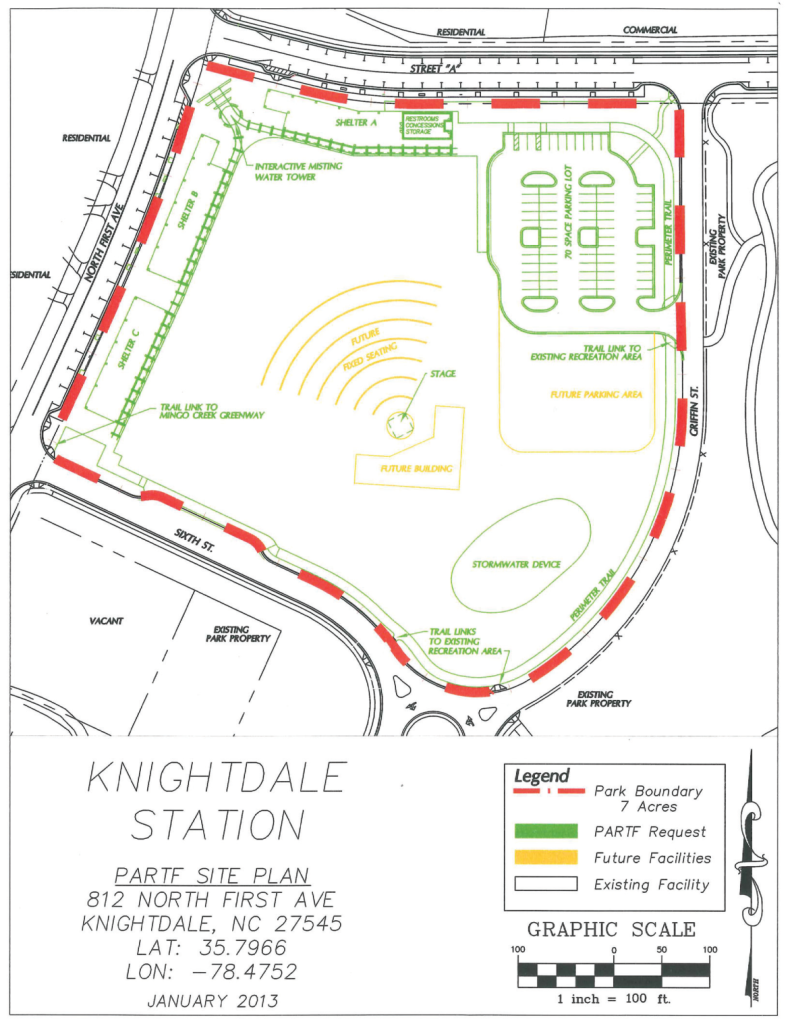
Town of Knightdale—Wake County
Knightdale Station is a 71-acre site that gives a nod to the town’s agrarian and rail history by creating recreational elements such as a railroad-inspired water tower misting station and a barnyard playground. Other recreational facilities include picnic shelters, amphitheater, dog park, and walking trails. Visitors to the park can leave their vehicles at home and can safely walk or bike to the park through the town’s extensive system of sidewalks. The recent completion of the regional greenway connection now allows access to the park to stretch even further beyond the town limits.
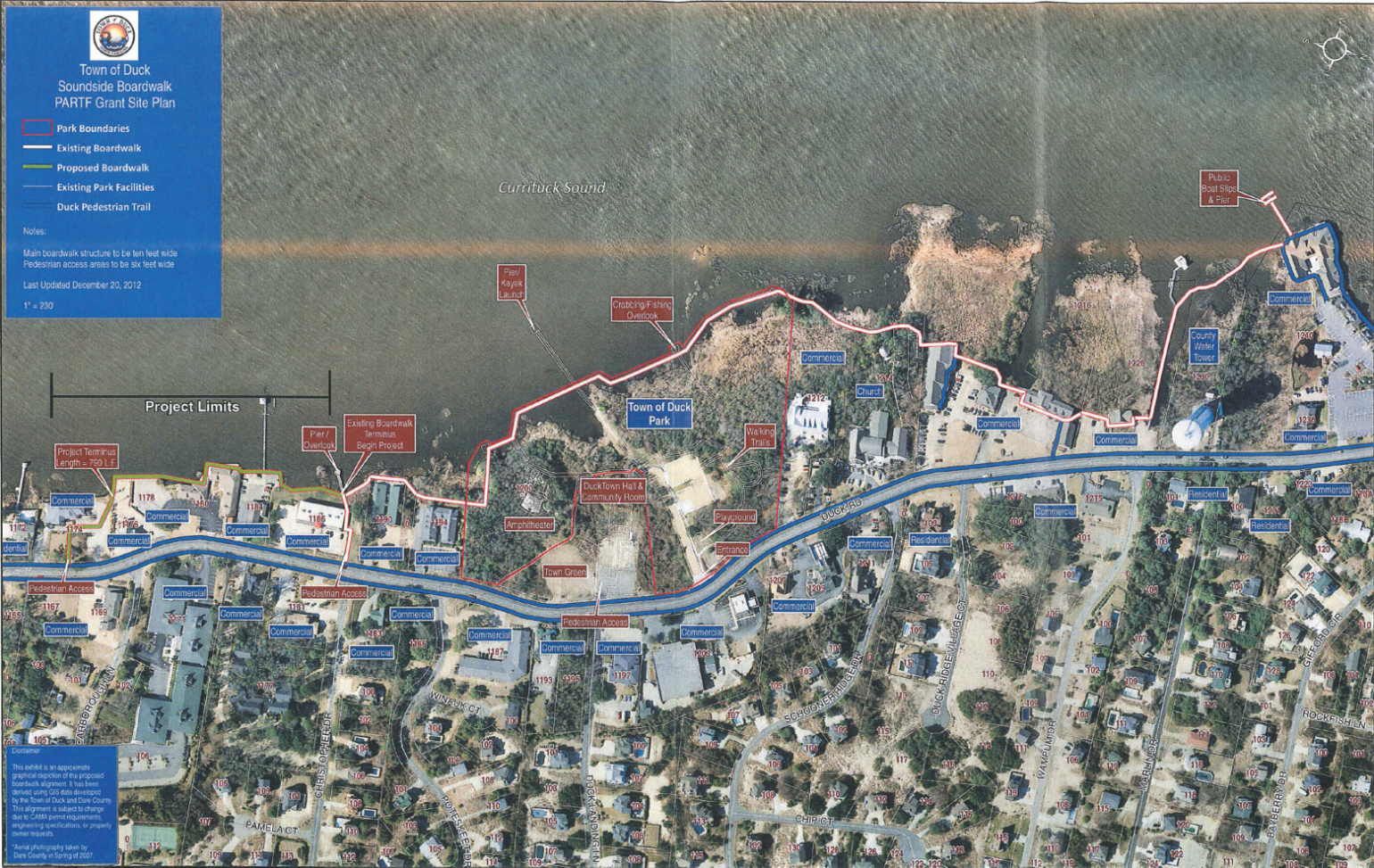
Town of Duck—Dare County
Sounside Boardwalk is a 4,000 linear foot greenway adjacent to the Currituck Sound that traverses the length of the town’s commercial area. It meanders over the sound providing a unique recreational amenity and soundside access. It also connects to individual businesses along its length allowing pedestrians to enjoy the town’s shops and restaurants. There are several locations along its length for fishing, crabbing, kayaking, boating, wildlife viewing and sightseeing.
Examples of 2013-14 Completed Local Government PARTF Projects
PARTF grant recipients are provided three years to complete their grant projects. Each year, projects from previous fiscal years are completed and the grant contracts are closed. The following are examples of projects funded in previous years and completed in FY 2013-14.
Woodmen Water Park—City of Kinston /Lenoir County
Grant Award: $500,000
Fiscal Year Awarded: 2011
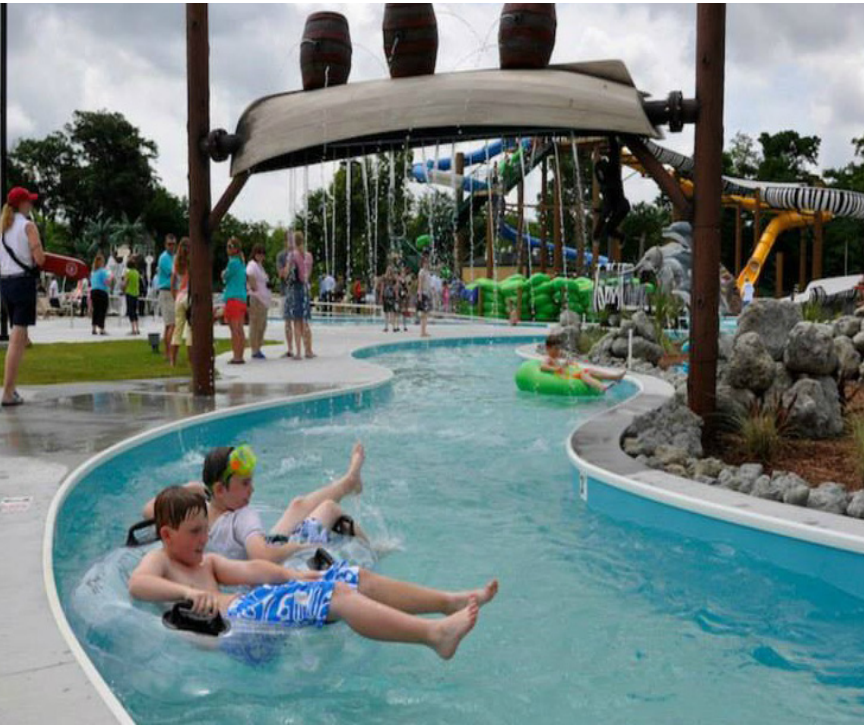
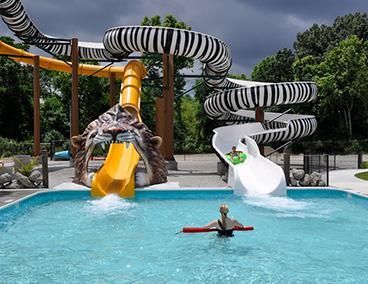
Enjoy some fun in the sun with family and friends at the Woodman Water Park. This 3.1-acre park adjacent to the Woodmen Community Center is a 2.6 million dollar public/private partnership in Lenoir County. Along with a $500,000 PARTF grant to assist in the construction of the park, other sources of funding included the Woodmen Foundation’s grant of $588,850, $1.0 million from the City of Kinston and Lenoir County, and $550,000 in local donations. This outdoor waterpark attractions include:
- 550-ft. lazy river with zero entry
- 8-lane 25yd. competition pool
- 32-ft. tower with water slides
- Concession stand
- 5,000-sq.-ft. pool with water play area
- Large picnic area
- 1,000-sq.-ft. wellness pool
- Locker rooms with family changing areas
The park welcomes all visitors especially the visually impaired. Park designers incorporated many features, such as jumbo printed signs in contrasting vivid colors, braille menus, zero entry pools, and several audible cues which alert patrons to various water features. In addition to those elements, the staff has undergone extensive training to assist people with visual impairments and making sure all visitors have a safe and enjoyable time.
Butner Athletic Park—Town of Butner
Grant Award: $500,000
Fiscal Year Awarded: 2010
The Town of Butner incorporated on November 1, 2007. Prior to their incorporation, the town was run by the State of North Carolina Department of Health and Human Services. As a small community that has only recently incorporated, the Town of Butner has faced challenges to meet the parks and recreational needs of its citizenry.
A 2008 recreational needs survey determined that 69% of respondents indicated that they did not participate in recreational activities within the town, with 50% of respondents indicating having to leave Butner to access recreation. Butner Athletic Park is serving to fill the need for recreation opportunity within the town, and provides much needed additional field space for the growing number of participants in South Granville Athletic Association’s programs and leagues.
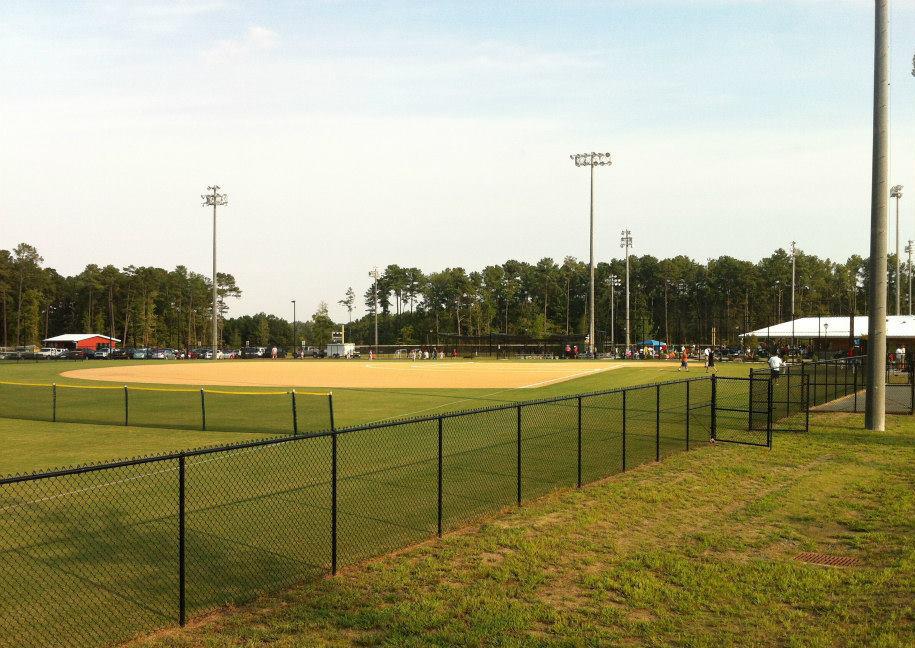
Butner Athletic Park was funded in 2010, receiving the maximum award of $500,000. Overall project costs totaled over $2.5 million with the town’s matching funds coming from other state and federal grants. The park provides facilities for all ages to play t-ball, baseball and softball, have a safe place to walk, bicycle and run, and a facility to play soccer or football. The park has three ball fields with a centrally located playground and multipurpose building with concessions, bathrooms, and a meeting room. Two of the ball fields are high school baseball regulation size with moveable mounds and temporary fencing so they can be used by all ages. The third field is a regulation softball field that also used for Little League teams. A multiuse field sits adjacent to the ball fields and multipurpose building. There is a walking trail around the perimeter of the site with paths between the ball fields and concessions.
Rock Springs Nature Preserve—Lincoln County
Grant Awards: $500,000 Acquisition of Property (Awarded FY 2008)
$415,000 Development of Facilities (Awarded FY 2011)
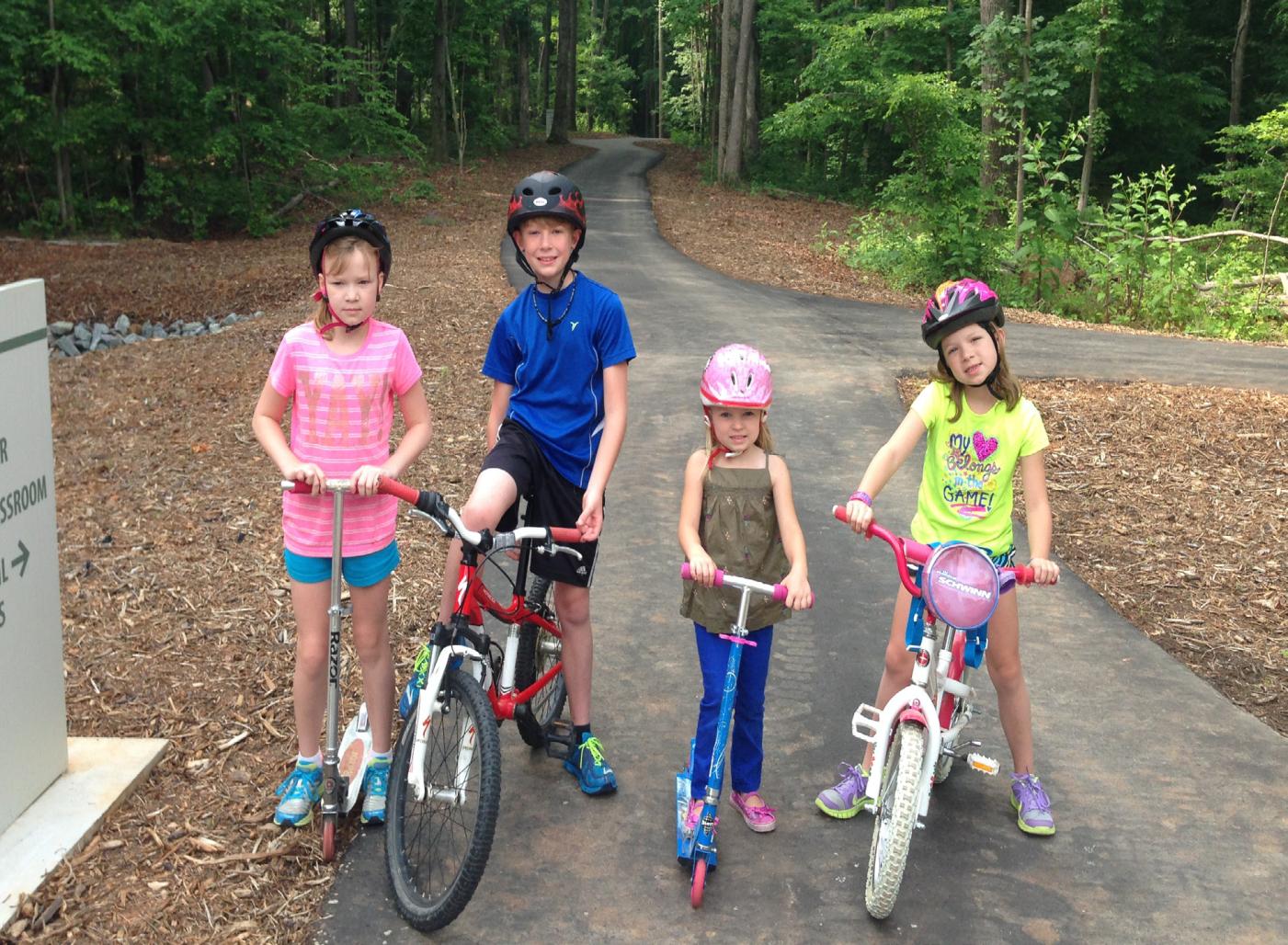
Rock Springs Nature Preserve is a 116-acre passive park located on Pine Ridge Drive in eastern Lincoln County. The new park creates a unique opportunity for a nature-themed facility, as well as provides public access to trails and the outdoors. The park property was purchased in 2008, following the development of a Source Water Protection Plan for eastern Lincoln County. The property is located on Little Creek Cove of Lake Norman, where the intake for the county’s water system is located, and three streams crossing the property feed into this cove. The County received assistance for the initial property purchase from PARTF ($500,000) and the Source Water Protection Program (a low interest loan program through NC DENR). Construction began in 2013, with the first phase completed in May of 2014. For this initial phase, Lincoln County received a $415,000 grant from the Parks and Recreation Trust Fund. Elements included the picnic shelter, restrooms, a playground, an amphitheater, a .4 mile loop trail, and a wildlife viewing area/outdoor classroom.
The Carolina Thread Trail also passes through Rock Springs Park. The Thread Trail is a 15-county initiative designed to develop a system of trails throughout the Piedmont region of North and South Carolina. A portion of the park’s paved loop trail and the future natural surface trails network will be designated as part of the Thread Trail.
Buffalo Creek Park—Town of Lake Lure
Grant Award: $93,478
Fiscal Year Awarded: 2012
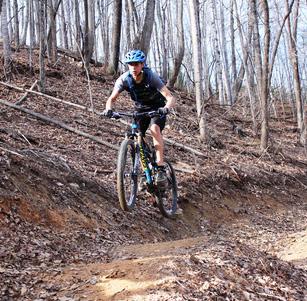
Buffalo Creek Park is the gateway to 1,500 acres of conserved land that protects the northern headwaters of Lake Lure. When fully developed, the park will offer 10-12 miles of intermediate to advanced mountain biking trails, including a portion of the Summits Trail, which will eventually circumnavigate the mountain peaks around Lake Lure and connect the area’s recreational lands. Buffalo Creek Park is the only mountain bike trail system within a 20-mile radius of Lake Lure and Chimney Rock State Park. While the park was designed and grant-funded as a mountain biking park, it is a real treat for various outdoor enthusiasts:
- Mountain bikers seeking to improve their climbing skills and to enjoy fast, flowing descents.
- Trail runners in search of a serious aerobic workout.
- Hikers wishing to spend a couple of hours on a smooth, pleasant trail through wooded terrain with a moderate amount of climbing.
- Dog owners intent on exercising themselves and their pet companions.
- Naturalists who will enjoy exploring the Park’s ecosystems that support several unique species, including the rare green salamander.
- And, for rock climbers, the trail intersects a boulder field with many new problems to be solved.
The 200-acre park was purchased by the Town of Lake Lure in cooperation with Carolina Mountain Land Conservancy (CMLC) with a PARTF grant. The first phase of the park development includes picnic facilities along Buffalo Creek and five miles of mountain bike trails installed by Trail Dynamics of Pisgah Forest, NC. This phase has been funded by grants from PARTF and the federal Recreational Trails Program (RTP), along with local funds. Within three months of opening, nearly 3,000 visitors have utilized the park’s trails. The Town is also working on Phase 2 which includes the second leg of the Summits Trail from Buffalo Creek Park to Eagle Rock. This phase has been funded by RTP and includes a land donation from CMLC that will serve as the Town’s match.
State Parks Program
Land Acquisition
The Parks and Recreation Authority approved projects totaling $3,138,000 at two state parks plus $87,000 for associated costs (Table 5-1). However, it will cost an estimated $176 million to purchase the 43,752 acres needed to complete all current state park units.
| PARK | ACRES | COST ($) | DESCRIPTION |
|---|---|---|---|
| Hammocks Beach State Park | 289 | $2,900,000 | Mainland property adjacent to existing state park property for future facility development. Partial funding for this critical project |
| New River State Park | 94 | $238,000 | Acquisition of a highly scenic tract that will help protect scenic views in the New River corridor. This property is also important for water quality protection of the New River and staff access to existing park property. |
| Parks System | $82,000 | Associated land expenses such as appraisals, title work, phase one environmental assessments and boundary surveys for all projects including those funded from other sources and prior year funding. | |
| TOTALS | 383 | $3,220,000 |
Construction and Renovation
During fiscal year 2013-14, the Parks and Recreation Authority approved state park construction and renovation projects totaling $4,236,275 (Table 5-2). The PARTF revenue allocated to capital improvements in the state parks system for fiscal year 2013-14 was $4,036,275. Additional funding was reallocated from old projects. With PARTF funds, the Division continues to address a lengthy backlog of construction and renovation projects in the state parks system. However, approximately $417.6 million is required to meet all of the needs for new construction and renovation for the state parks system.
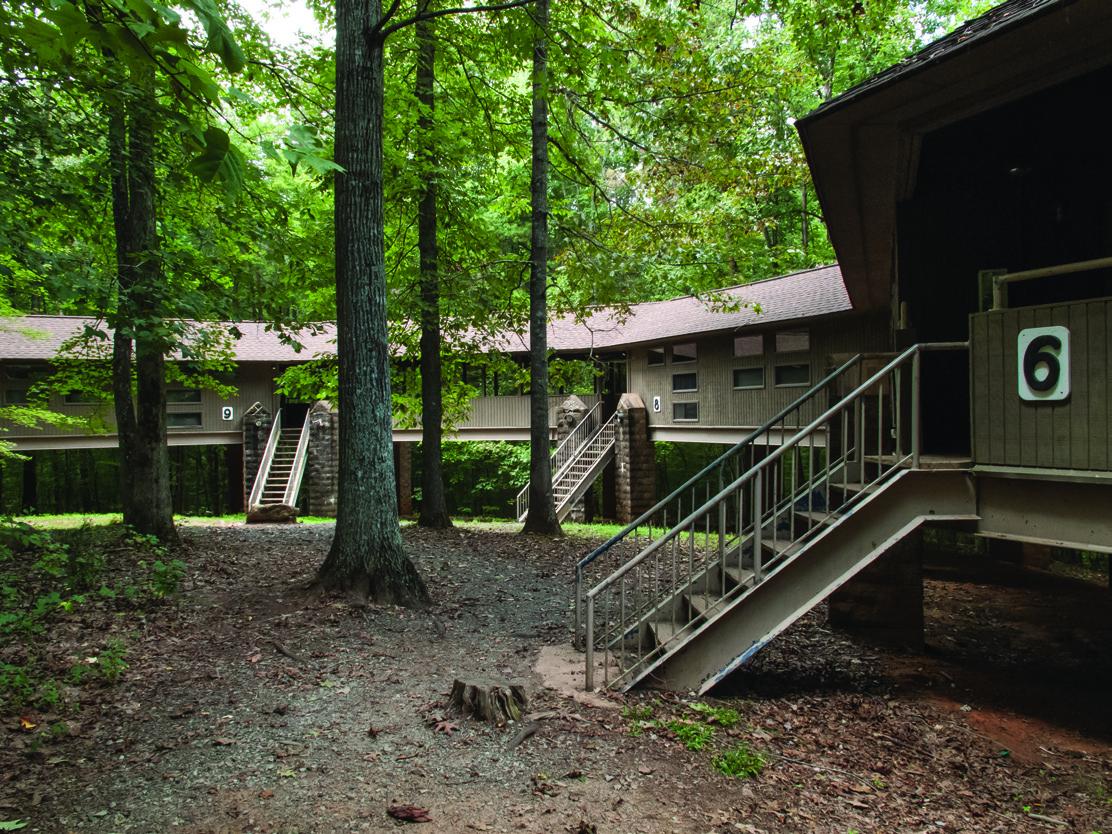
A portion of PARTF funds this year will be used to create a plan to renovate the Youth Cabins/Dormitories at Haw River State Park.
| PARK | PROJECT | COST ($) |
|---|---|---|
| Park System | Major Maintenance Funds | $1,500,000 |
| Park System | Trail Maintenance Funds | $200,000 |
| Park System | Exhibit Maintenance Funds | $25,000 |
| Park System | Demolition Funds | $25,000 |
| Carolina Beach State Park | Sewer Improvements (Construction Funds) | $650,000 |
| Chimney Rock State Park | Sewer Improvements (Construction Funds) | $750,000 |
| Haw River State Park | Youth Dorm Renovations (Design Funds) | $86,000 |
| Jordan Lake State Recreation Area | Wastewater System Improvements (Design Funds | $150,000 |
| Morrow Mountain State Park | Electrical Distribution System Improvements (Construction Funds) | $800,000 |
| Pilot Mountain State Park | Sewer Improvements (Construction Funds) | $399,777 |
| TOTAL REQUEST | $4,236,275 |
Operating Expenses Associated with State Park Projects
In allocating PARTF funds to the state parks system, the Parks and Recreation Authority considered the operating expenses that may be associated with the projects (G.S. 113-44.15(b3)). The Division of Parks and Recreation estimated these costs and presented them for the board’s consideration when the projects were proposed for funding. The estimated costs are based on conceptual plans for each project.
No additional operating expenses are expected from these improvements.
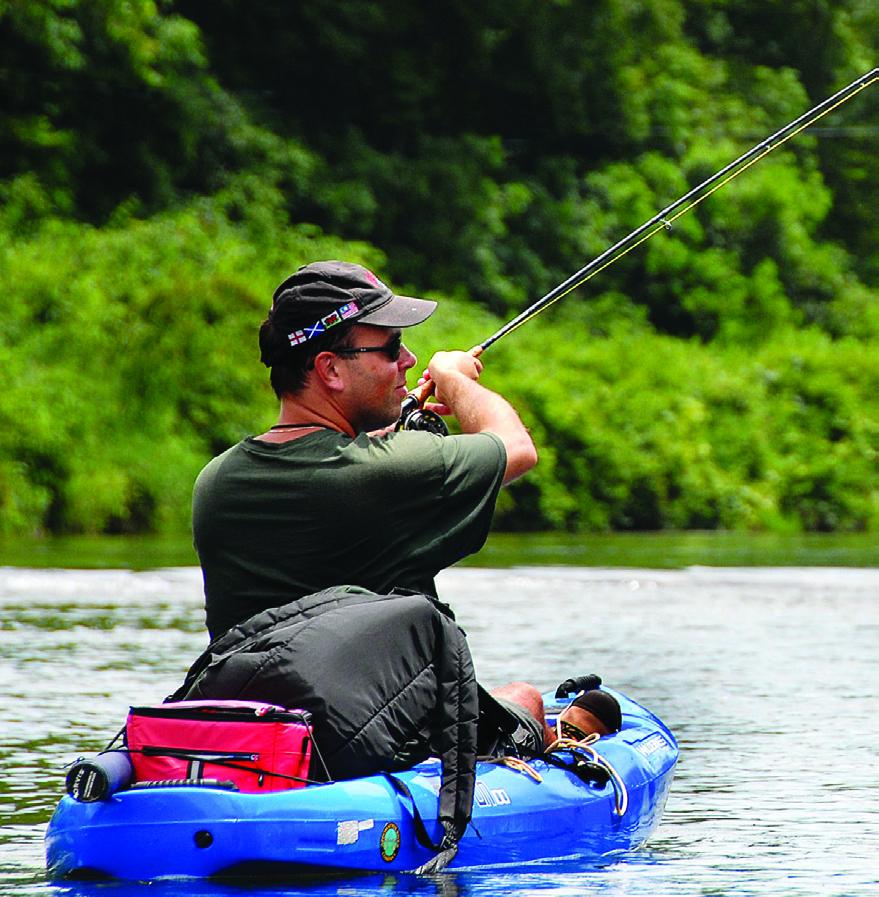
New River State Park.
Public Beach & Coastal Waterfront Program
Program Description
(Provided by the Division of Coastal Management)
North Carolina’s Public Beach and Coastal Waterfront Access Program was established by the General Assembly in 1981. The program began receiving five percent of the revenues from the Parks and Recreation Trust Fund during the 1996-97 fiscal year. The program’s enabling legislation (GS 113A-134.1) states that public interest would be served by providing increased access to coastal waters, public parking facilities, or other related public uses.
The program, administered by the Division of Coastal Management (DCM), offers matching grant funds primarily to local governments throughout the 20 coastal counties. Since 1981, over 300 public access sites have been acquired or improved at a cost of over $37 million in grant funds. Local governments are responsible for construction, operation and long-term maintenance of the facilities. While most of the early projects were located along the oceanfront, more projects are now designed to improve access to estuarine shorelines, coastal rivers, and urban waterfronts.
The Division of Coastal Management sends pre-application requests for proposals (RFPs) to local governments in the 20 coastal counties annually. Criteria developed by the Coastal Resources Commission, is used to select grant recipients. Local governments are given eighteen months to complete projects. Extensions may be granted, with a three year maximum life of a contract, for unforeseen events and delays, such as hurricanes.
Local governments are required to match from 10 percent to 25 percent of the project costs based on the type of project being funded and the communities’ economic status per the North Carolina Department of Commerce’s Tier designations, as outlined by the Lee Act (G.S. 105-129.3). The required cash match may include Federal and other State funds provided these funds are not already being used as match funds for any other state or federal program.
Types of Projects Funded
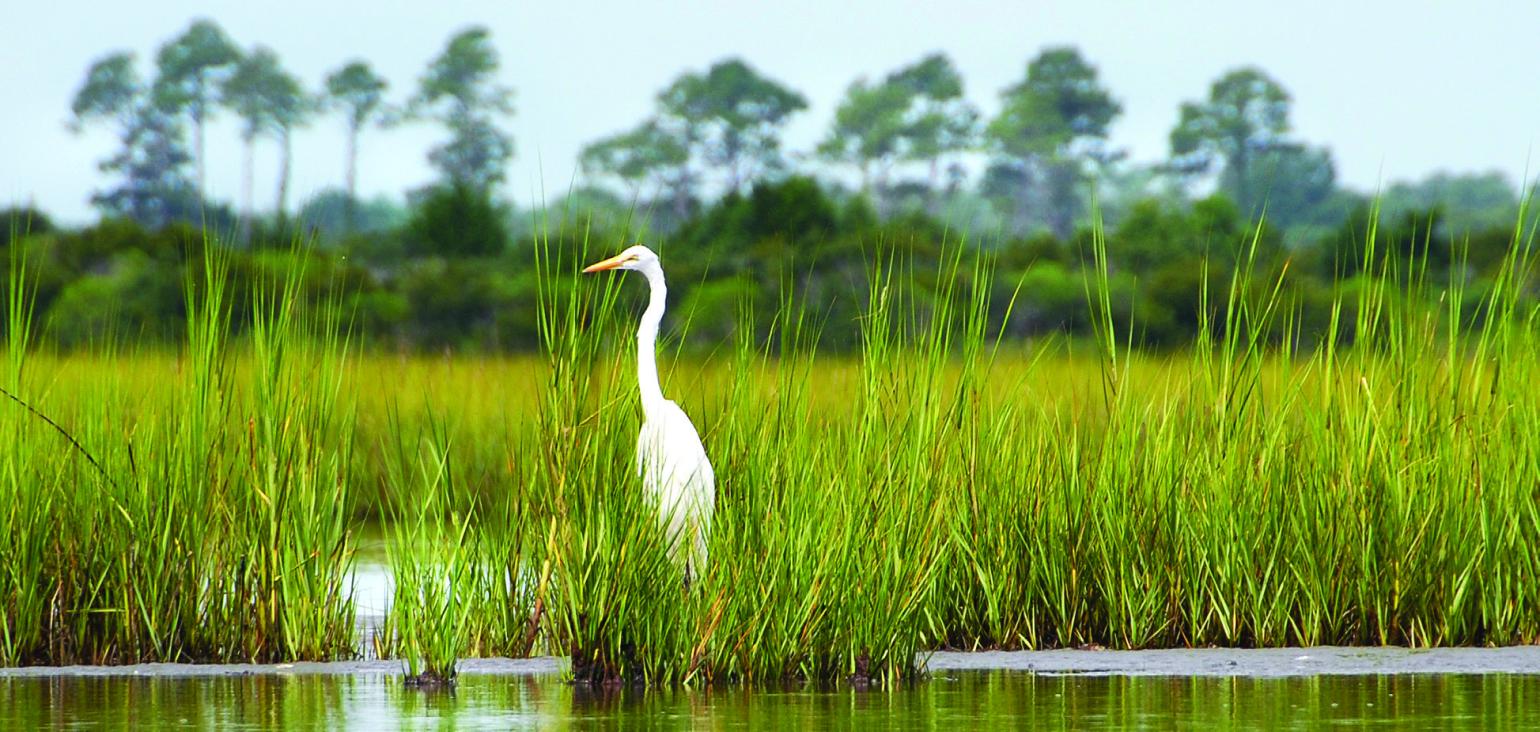
Communities can apply for five different types of water access sites: local, neighborhood, regional, multi-regional and urban waterfront redevelopment projects.
- Local access sites include public access points, offering minimal, or no facilities. Pedestrians who reside within a few hundred yards of the site primarily use them. Generally, these access ways are a minimum of ten feet in width providing only a dune crossover or pier. Vehicle parking is generally not available at these access sites. Bicycle racks may be provided as well as litter receptacles and access signs.
- Neighborhood access sites are public access areas offering parking, usually for five to 25 vehicles, a dune crossover or pier, litter receptacles and public access signs. Such accesses are typically 40 to 60 feet in width and are primarily used by individuals within the immediate subdivision or vicinity of the site. Restroom facilities may be installed.
- Regional access sites serve the public throughout an island or community including day visitors. These sites normally provide parking for 25 to 80 vehicles, restrooms, a dune crossover, pier, foot showers, litter receptacles, and public access signs. Where possible, one-half acre of open space in addition to all required setback areas should be provided for buffering, day use, nature study or similar purposes.
- Multi-regional access sites are generally larger than regional access ways but smaller than state parks. Multi-regional facilities provide parking for 80 to 200 cars, restrooms with indoor showers and changing rooms, and concession.
- Urban waterfront redevelopment and working waterfront projects that improve public access. Such projects include the establishment or rehabilitation of boardwalk areas, shoreline stabilization measures such as the installation or rehabilitation of bulkheads, and the placement or removal of pilings for the purpose of public safety and/or increased access and use of the urban waterfront.
Additionally, as part of rule changes that took effect in 2007, boat ramps and motorized boating facilities may be included as part of any of the above types of access provided the pedestrian access is also part of the project.
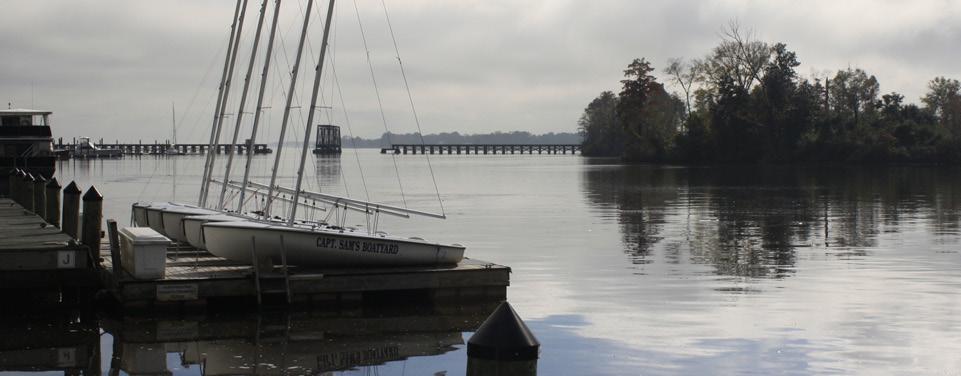
From Washington’s waterfront, where the proposed People’s Pier is sited, looking southeast down the Pamlico River (photo by Stan Deatherage).
PARTF Awards Based on 2013-14 Deposits and Other Unencumbered Funds
The actual amount transferred from the PARTF to DCM during fiscal year 2013-14 was $563,970 instead of the allotted amount of $558,175. The $5,795 excess was a result of projected revenue falling short of actual deposits into the trust fund. This overage will be adjusted to reflect the current fiscal year’s allotment to DCM. In addition to the money transferred to DCM, there was $34,894 remaining unencumbered from previous funding allocations making a total of $598,864 available for grants. Table 6-1 provides the list of local governments that have been awarded grant funding or have been invited to submit a final application for funding.
| LOCAL GOVERNMENT | PROJECT DESCRIPTION | TOTAL PROJECT COST | GRANT AMOUNT |
|---|---|---|---|
| Atlantic Beach | Charlotte Avenue Access Dune Crossover | $ 88,710 | $ 66,532 |
| Kitty Hawk | Lillian Street Parking | $ 70,588 | $ 52,941 |
| Morehead City | Jib Plaza Phase III Pavilion | $ 266,666 | $ 200,000 |
| Oriental | South Avenue Restrooms | $ 63,000 | $ 47,250 |
| Swansboro | Bicentennial Park Improvements | $ 47,000 | $ 35,250 |
| Topsail Beach | Darden Avenue Dune Crossover | $ 60, 641 | $ 45,391 |
| Washington+ | People’s Pier Access | $ 133,333 | $ 120,000 |
| Windsor+ | Elm Street Access Improvements | $ 35,000 | $ 31,500 |
| TOTALS | $ 764,938 | $ 598,864 |
+ Denotes communities that are Tier 1 jurisdictions. $151,500 or about 25% of the grant awards are proposed for Tier 1 communities.
The above project list does not include any direct partnerships with other State agencies. The only non-award use of the funds is providing access site signs made by the State Division of Corrections. Signs are provided to local governments for new sites and for replacement of weathered signs.